

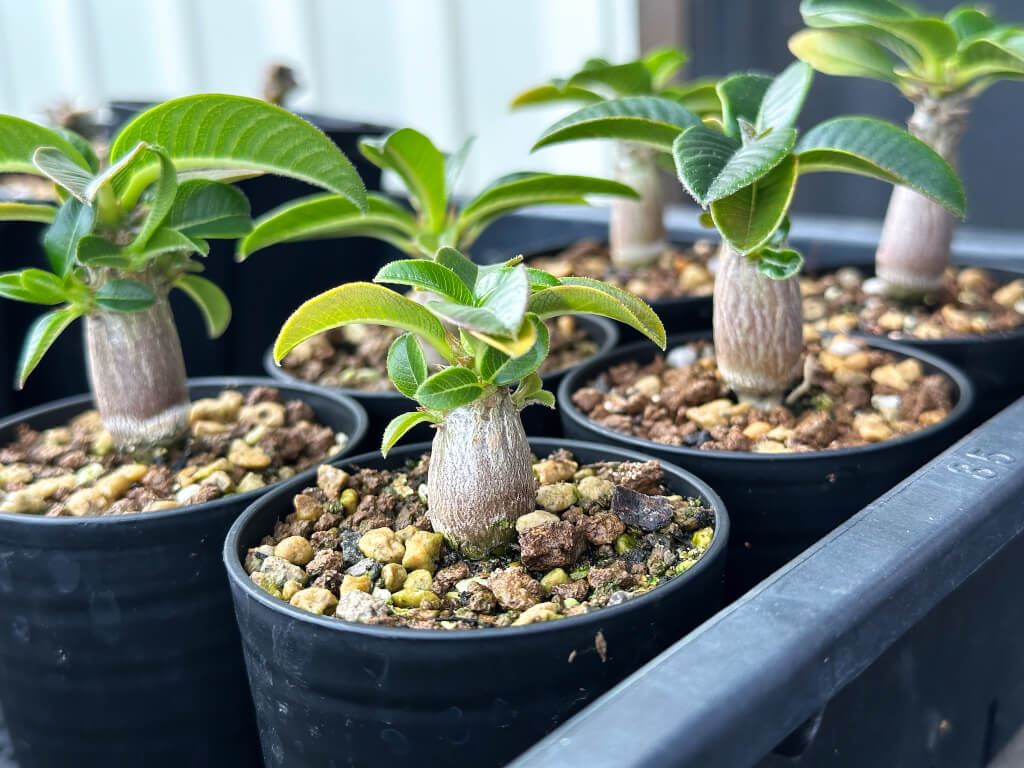
What Is A Caudex Plants
Have you ever scrolled through social media or visited a fancy plant shop and stumbled upon a plant that looks like it’s from another planet? A plant with a thick, sculptural, often bizarrely-shaped base topped with a canopy of delicate leaves? You’ve just met a caudex plant.
These captivating specimens are taking the plant world by storm, and for good reason. They’re low-maintenance, drought-tolerant, and each one is a living piece of sculpture. But what exactly are they?
This guide will demystify these incredible plants and give you the confidence to start your own collection.
What Exactly is a Caudex? The Definition
In botanical terms, a caudex (plural: caudices) is a swollen, woody stem base or root crown that stores water. Think of it as a natural canteen the plant uses to survive long periods of drought in its native, often harsh, environments.
Plants that possess this feature are called caudiciforms or caudiciform plants. The term “caudiciform” literally means “having the form of a stem or trunk.”

Why Do Plants Form a Caudex? The Evolutionary Advantage
It all boils down to survival. Caudiciform plants typically hail from arid regions in Africa, Madagascar, and Mexico, where rainfall is unpredictable.
That swollen caudex is a brilliant evolutionary adaptation. During a rare downpour, the plant soaks up as much water as possible, storing it in its fleshy tissues. This reservoir allows it to stay hydrated and continue growing during months, or even years, of drought. When times get tough, the plant will often drop its leaves to conserve energy and water, relying solely on its stored reserves until conditions improve.
7 Popular and Fascinating Types of Caudex Plants
The world of caudiciforms is vast and diverse. Here are some of the most popular types you’re likely to encounter:
Adenium obesum (Desert Rose): Famous for its stunning trumpet-shaped flowers and incredibly fat, bulbous base.
Dioscorea elephantipes (Elephant’s Foot): A true marvel, with a cracked, geometric-shaped caudex that resembles a tortoise shell or elephant skin.
Pachypodium lamerei (Madagascar Palm): Not a true palm, but a spiny, majestic succulent with a thick silver trunk.
Beaucarnea recurvata (Ponytail Palm): A common and beloved houseplant with a bulbous, water-storing base and a ponytail-like burst of leaves.
Jatropha podagrica (Buddha Belly Plant): Features a uniquely shaped, bottle-like caudex and bright coral flowers.
Fockea edulis: A vining caudiciform with a beautiful, twisted gray caudex that can be trained artistically.
Cyphostemma juttae: Known for its beautiful blue-green leaves and a chunky, bottle-shaped caudex.
Related Posts